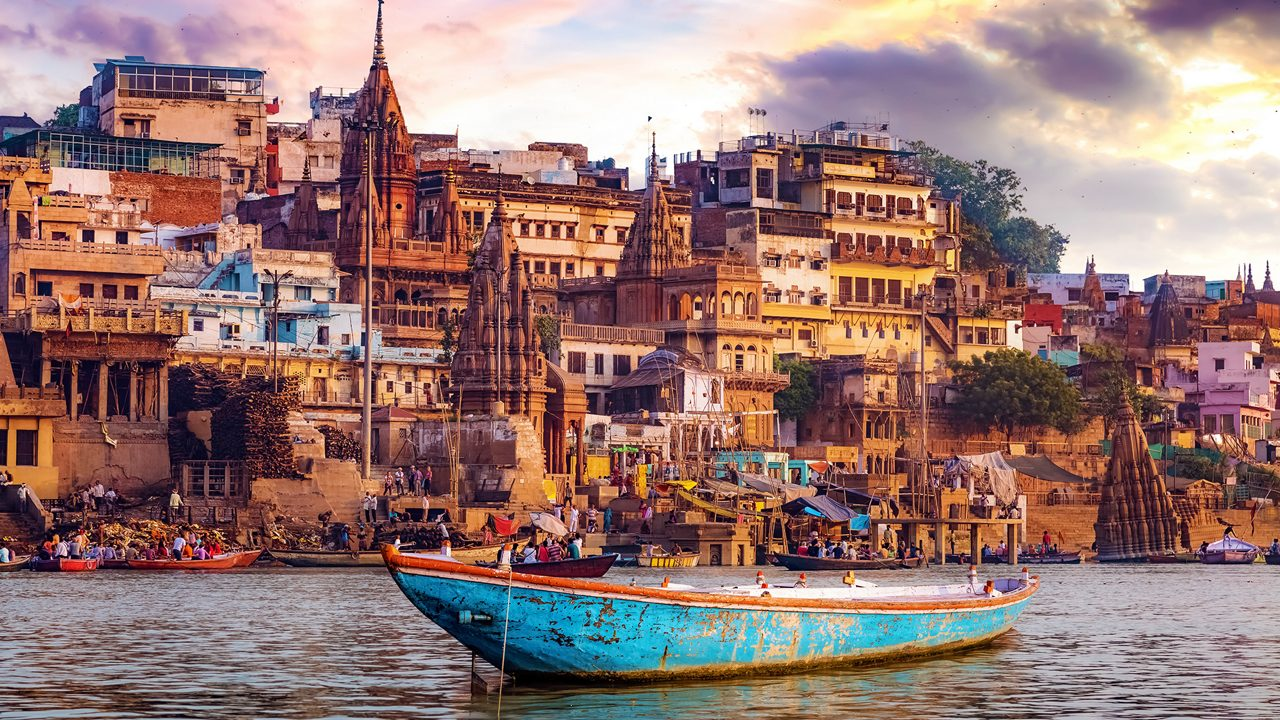
After Phnom Penh, it was time for one of the biggest changes during the entire journey. I left Cambodia and continued to India. The next stop was Varanasi, a city I had heard a lot about before arriving but had found difficult to imagine in reality. I knew the city would be intense, colourful and full of people, but it was still difficult to prepare for the feeling when I finally arrived.
The first thing I noticed was the noise. Varanasi is one of those places where something is constantly happening around you. People, scooters, tuk-tuks, vendors and religious ceremonies all come together and create a constant background of noise. After the quieter days in Cambodia, it took some time to get used to it, but at the same time I found it fascinating. It really felt like I had arrived in a completely different part of the world.
I stayed relatively close to the Ganges and spent a lot of time walking around the narrow streets. It was easy to get lost, and sometimes it felt as if every small street simply led to another street. There were small shops, temples, restaurants and people walking in every direction. Cows could suddenly be standing in the middle of the road and you simply had to wait until they decided to move.
The walks were actually what I enjoyed the most. Varanasi is not a city where you simply walk from one attraction to another. The city itself is the experience. I could walk around without any particular destination and suddenly end up at a small ghat, see a religious ceremony or discover something new in an alley. It was sometimes messy, sometimes quite chaotic, but almost never boring.
The Ganges naturally became a central part of my stay. The first time I went down to the river was early in the morning. It was still relatively quiet and the light over the river gave the entire area a very special atmosphere. People were bathing, washing themselves, praying and performing different religious rituals. I mostly stood back and tried to take in everything happening in front of me.
One of the things I really wanted to do was take a boat trip on the Ganges at sunrise. It became one of my favourite experiences in Varanasi. Sitting on the boat and slowly travelling along the river while the sun rose over the city was incredibly beautiful. From the water I also got a completely different perspective of all the ghats and buildings along the river.
In the evening, the Ganges was almost even more special. I saw Ganga Aarti and watched people gather at the ghats for the ceremony. Fires, music, prayers and large crowds filled the area. There were a lot of people and it was quite difficult to understand everything that was happening, but that was also what made it feel like an experience that could not really be found anywhere else.
At the same time, Varanasi was also a city that could feel very intense. It was hot, crowded and full of people almost everywhere. After a few hours outside, I could become quite tired from all the impressions. I therefore quickly learned to take breaks, sit down at a café or return to my accommodation for a while.
Food was another part of the experience. I tried several different Indian dishes and ate at both smaller local places and restaurants that were more adapted to travellers. There was a lot of vegetarian food and I really appreciated being able to find good food almost everywhere. Street food was also tempting, although I tried to be a little careful about what I ate.
Something I really enjoyed was sitting at a café overlooking the Ganges. After walking around for hours, it was nice to order a chai or a cold drink and simply sit and watch life around the river. It was almost like taking a break from the intensity of the entire city.
Varanasi also made a strong impression on me because religion is so visible in everyday life. In many places during the journey, religion and culture had been part of the experience, but here it felt much more present. Temples, prayers, ceremonies and people who had travelled to the city for religious reasons were always around me.
I felt that it was important to try to show respect while walking around. It is easy as a tourist to want to photograph everything because so much is new and different, but at the same time it is important to remember that this is people's everyday life and religious life. Sometimes I therefore put my camera away and simply watched instead.
The traffic was also completely different from what I was used to. Scooters, cars, rickshaws and people moved through the narrow streets and sometimes it felt as if everything worked without any obvious rules. I had to stay alert whenever I was walking. At the same time, there was something fascinating about how everyone seemed to find their own way through the chaos.
After a few days, I actually started getting used to everything. The sounds no longer felt as overwhelming, I found my way around the alleys more easily and I started to understand the rhythm of the city a little better. I think Varanasi is one of those places that becomes better the longer you stay because you need some time to get into its pace.
What I mainly take away from Varanasi is the feeling. It is difficult to describe the city using only a few attractions because it is the combination of everything that makes it special. The Ganges, the ghats, the people, the food, the sounds, the smells and the narrow streets together create something I have not experienced anywhere else during the journey.
When it was eventually time to leave Varanasi, it felt almost a little strange. I had only been there for a few days, but it felt like I had experienced an incredible amount in a short time. The next stop would be Meghalaya, far to the east in India. It would be another major contrast – from Varanasi's narrow streets and the Ganges to green mountains, waterfalls and much calmer surroundings.
I was actually very excited about that change. Varanasi had been intense in almost every possible way and I felt that Meghalaya would give me the opportunity to slow down again and experience a completely different side of India.
These are my favourites
A good option if you want to stay centrally and be close to the ghats and the Ganges. It is practical when you want to be able to go out early in the morning and explore the area.
💰 Price level: $$A nice place to take a break from the heat and the intensity of the city. Good for coffee, something to eat and a slightly calmer pace.
💰 Price level: $1. The Ganges – The heart of Varanasi and the place around which much of the city's life revolves.
2. Sunrise boat trip – One of the best ways to experience Varanasi from the river.
3. Ganga Aarti – A powerful and special religious ceremony that really shows the spiritual side of the city.
4. The ghats – Walk along the river and discover the different ghats and all the life around them.
I continued from Cambodia to India and travelled onwards to Varanasi. It was quite a big contrast after travelling through Southeast Asia.
💰 Price level: $$$After Varanasi, the journey continued east towards Meghalaya to experience mountains, waterfalls, nature and a much calmer side of India.
💰 Price level: $$$Varanasi has plenty of small restaurants and food places where you can try classic Indian dishes. There is a lot of vegetarian food and many different flavours to discover.
I recommend trying smaller local restaurants and having something warm and simple after a long day exploring the city.
💰 Price level: $–$$Try to get down to the Ganges early in the morning. The temperature is more comfortable and the city has a completely different atmosphere before the day has really started.
Also be prepared for large crowds, traffic and strong impressions. Take breaks and try not to plan too much into the same day.